ספר מורמון
The Book of Mormon and the Bible in Hebrew
Every word has its English meaning beneath it, and a Hebrew voice reads it to you. Free to read here, no account needed.
Start reading1 Nephi 1605,824 words of Hebrew·1,705 chapters·six volumes
Every word of the Old and New Testaments, the Book of Mormon, the Doctrine and Covenants, the Pearl of Great Price and the Joseph Smith Translation, in Hebrew, each with its transliteration and its English gloss beneath it.
The Hebrew Book of Mormon: the whole book rendered in pre-exilic Classical Biblical Hebrew, the Mikraic register of Isaiah and Jeremiah.
How it works


“This is a really cool way to read Isaiah. It takes a second to get used to it, but once I do, it makes a lot of sense. And I like that I feel like I’m understanding Hebrew.”
“Thoroughly enjoying this. I took Biblical Hebrew from the Israel Institute of Biblical Studies and this translation of the Book of Mormon gives some great insight. Thank you.”
“Solid translation and great insight into the fascinating cultural and theological interpretations.”
“A wonderful resource for anyone interested in studying the scriptures in Hebrew. Having the Book of Mormon and the entire Bible together in one collection makes this a unique and valuable addition to any personal library. I appreciate the opportunity to explore the scriptures in their Hebrew language and gain a deeper appreciation for their meaning. Highly recommended!”
“Looking at and holding this book has been comfort to me. Seeing how Hebrew and English are aligned so easily is profound. The Book of Mormon is testament of our Saviour Jesus Christ and is for the Jewish people as well as the Gentile nations. The combining of both languages in this interlinear edition works with this great mission. I would recommend reading this book with having an open heart.”
“Knowing the author, I can testify that a ton of meticulous attention to detail went into this translation, by someone with a true love for Christians and Hebrews alike. If you’re looking for a bona fide translation, this is your resource.”
“Exactly what I needed! This app is easy to use, looks great, and makes everything so much more convenient. The layout is clear, and it’s easy to find what you’re looking for. It has quickly become part of my daily routine, and I honestly can’t imagine being without it anymore. Highly recommend giving it a try!”
“I have nothing but good things to say about this app and the translations. I learned Biblical Hebrew in college and have enjoyed studying the Tanakh as much as I can, but I have also always wanted to have the Standard Works available in the language, as well. The text is clean, the interface is slick, and there are so many great helps to make Hebrew readable. Pair this with Lingua Deo Gloria’s Hebrew course and you’ll be on your way to mastering the tongue of our ancient fathers!”
To the Reader
For ten years I looked for the Standard Works in Hebrew and it did not exist.
Why this existsthe ten years, and the six volumes
I had studied Classical Biblical Hebrew. I had shelves full of Tanakh, Talmud, Zohar, grammars, lexicons. I had read the Book of Mormon in English, in Spanish, in Samoan, over and over, my whole life. And the one thing I wanted to do with it, I could not: I wanted to read it in Hebrew.
Not modern Hebrew. The Hebrew of the prophets. The Hebrew Nephi tells us his father spoke: the language of Jerusalem before the exile, the living tongue of the First Temple. I wanted to open a book and see וַיְהִי on the page where “and it came to pass” had always been. I wanted to hear בְּרִית where the English said “covenant,” and know I was hearing the same word Abram heard at the ceremony of the pieces. I wanted the Book of Mormon to sound like what it claims to be.
Nobody had made that book. So I made it.
And it could not stop there. Reading the Book of Mormon in Hebrew means reading it against the Tanakh (the same covenant words, the same cadences), so the Tanakh had to be here too, and the New Testament with it. The Doctrine and Covenants and the Pearl of Great Price nobody had put into Biblical Hebrew at all, so I translated those as well. What began as one book is six, gathered into one place, every word carrying its gloss beneath it.
I did not set out to produce an academic work. I set out to fill a gap on my own shelf. The deeper I went into the Hebrew the more these books opened up, not as texts that need defending, but as texts that defend themselves. The Hebraisms are not decorative. They are structural. The covenant language is not borrowed. It is native.
I speak English, Samoan and Spanish, and I have studied these books in all three my whole life. It was Hebrew that brought me closest to what they were trying to say. I hope it does the same for you.
May it bring you nearer to the God of Israel, who engraved His people on the palms of His hands and does not forget.
Chris Lambe
If you spot a gloss that could be clearer, or a root connection worth drawing out, please reach out. Corrections from readers are how this text keeps getting better.
What is here, and whose it iswhose Hebrew is in each volume
An edition should say what its text rests on before you read it, not after. Three of these volumes I translated into Hebrew. Three carry Hebrew I did not translate, and have set here in the same apparatus so they can be read beside the others.
| Volume | The Hebrew text is |
|---|---|
| Tanakh · Old Testament | The received text. The Masoretic Text, unaltered: not a translation of mine but the Hebrew itself. Where this edition differs from any printed Tanakh it is an error, and I would like to know about it. |
| New Testament | Translated by Franz Delitzsch, revised. His Hebrew New Testament (1877–1892), long in the public domain. Where his Hebrew adds to the English, leaves something out, or does not make sense, I have revised it; and where he renders a quotation from his own reading rather than the verse in front of him, I have brought it back to the text being quoted. |
| Book of Mormon | Translated. Into Classical Biblical Hebrew, held to forms attested before 600 BC. |
| Doctrine and Covenants | Translated. A nineteenth-century book, so it is allowed nineteenth-century things the Book of Mormon is not. |
| Pearl of Great Price | Translated. |
| Joseph Smith Translation | Translated on a received base: the Masoretic Text or Delitzsch stands where the verse is unchanged, and the revision is translated. |
Each volume I translated states its own discipline on its own first page, because the rules are not the same for all three. The English is nowhere mine: it is the received English of each book.
This is an independent, personal project, not an official publication of The Church of Jesus Christ of Latter-day Saints. The whole text is here, and it is free. Glosses will keep being refined as long as I am reading them.
How to read itthe word blocks, and what the reader does
Each verse is a row of word blocks, read right to left. On top is the Hebrew word, pointed. Directly beneath it is the English that word is carrying, with a small chevron marking where one word ends and the next begins. Here are the first six words of the Book of Mormon:
Two things that example is teaching. One Hebrew word can carry three English ones: נוֹלַדְתִּי is a whole clause. And the gloss line reads in Hebrew order, not English: the adjective follows its nouns, so לְאָב וָאֵם חֲסִידִים glosses “of a father / and a mother / goodly,” never “of goodly / parents.” Reordering it into comfortable English is exactly what would hide the grammar you came to see.
So the glosses are not elegant, and they are not meant to be. They are meant to be transparent. “And it happened” for וַיְהִי tells you three things at once (the conjunction, the narrative tense, and the root), which is more grammar than most translations will give you in a single word anywhere.
Read the Hebrew line if you can. If you cannot, read the glosses; you will have a rough but honest rendering of every word. And read repetition on purpose. When a covenant term comes back, treat it as a signal rather than a synonym: biblical texts teach by returning to a word, and the reader is meant to notice. In time יְהוָה, בְּרִית, חֶסֶד, צֶדֶק and מִשְׁפָּט will start to stand up off the page on their own.
Every volume also carries the same apparatus:
- Five ways to read. The bar at the bottom switches between the interlinear, the Hebrew alone, the Hebrew beside the printed English, a transliteration, and a view with the vowel points stripped for practice.
- Tap any word. A card opens with its transliteration, its gloss, a full parse (the word broken into prefix, stem and suffix), its root, its Strong’s number, and how often that root occurs in each of the six volumes.
- Follow a cross-reference. The small letters beside a verse open the passages it points to, each shown as Hebrew interlinear rather than a bare reference, so you can read the connection instead of going to look it up.
- Open the dictionary. From the root on any word card you reach the root glossary: every attested form of that root, what each one means, and every verse it stands in. This is the part that most rewards wandering.
- Search, mark, keep. Search the Hebrew with or without points, or search the English. Highlight, underline, write a note on a verse, export the lot. Any volume downloads for reading with no connection at all.
If the alphabet itself is new to you, start here instead: Reading Hebrew: the letters, the vowels, and the marks →
And once you can read them: The shortest way in: 300 roots carry 85% of the Book of Mormon →
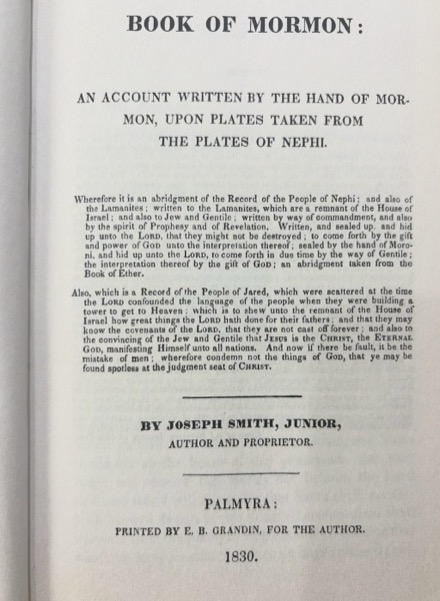
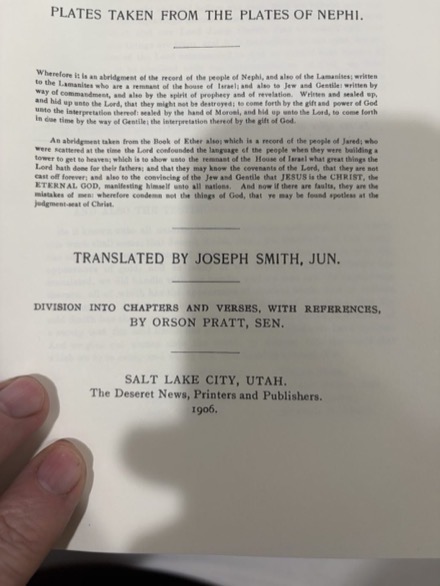
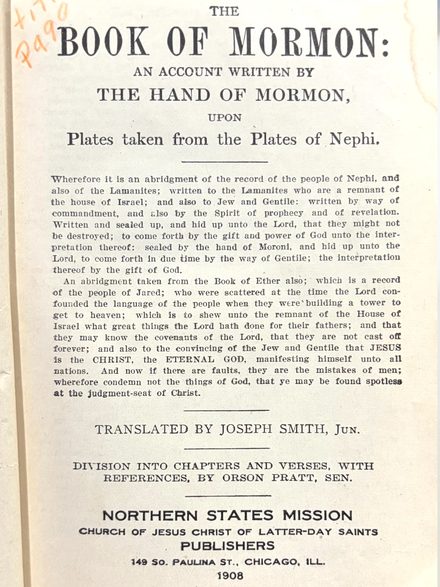
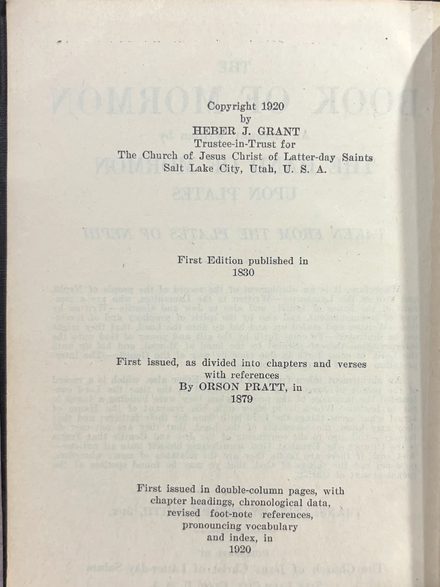
מְקוֹרוֹת הַמַּהֲדוּרָה · Source editions
Questions
Do I need to know Hebrew?
No. Every Hebrew word has its pronunciation and its English meaning under it, and the whole verse can be read beside the English.
Is it free?
Yes. Every volume is free to read here, with no account and no ads, and the iPhone and Android apps are free too. The only thing that costs money is the printed books.
Who translated it?
The Old Testament is the Masoretic Hebrew text itself, in the Mechon Mamre edition. The New Testament is Franz Delitzsch’s Hebrew translation, revised by Chris Lambe where it adds to the English, leaves something out, or does not make sense. The Book of Mormon, the Doctrine and Covenants, the Pearl of Great Price and the Joseph Smith Translation are translated by Chris Lambe. More in To the Reader
Is this from the Church?
No. This is an independent, personal project, not an official publication of The Church of Jesus Christ of Latter-day Saints.
Which Hebrew is it?
The Book of Mormon is in Classical Biblical Hebrew, the Hebrew of Isaiah and Jeremiah before the exile. The Old Testament is the Masoretic text, unchanged, and the New Testament is Delitzsch’s nineteenth-century Hebrew with those revisions.